
Midnite Casino KYC Verification United Kingdom
The modern online gambling industry in the United Kingdom operates under one of the strictest regulatory environments in the world. Every licensed casino platform must comply with identity verification procedures designed to protect players, financial systems, and the integrity of gaming services. This process is commonly known as KYC Verification — short for “Know Your Customer.”
For players using Midnite Casino and other UK-regulated platforms, KYC is not simply an optional security measure. It is a mandatory requirement enforced by the UK Gambling Commission (UKGC) and anti-money laundering regulations. While some users initially view verification as an inconvenience, the system actually creates a safer and more transparent gambling environment.
KYC procedures help online casinos confirm that players are legally eligible to gamble, that their payment methods are legitimate, and that accounts are not connected to fraud, identity theft, or financial crime. Without proper verification, operators risk severe penalties and potential license suspension.
The United Kingdom has become a global benchmark for gambling compliance standards. British online casinos must verify customer identity before enabling unrestricted withdrawals, account access, or certain financial transactions. This ensures that platforms remain accountable and that player protection remains central to the industry.
For many users, the first interaction with KYC occurs shortly after registration. During account creation, players provide personal details such as:
- Full legal name
- Residential address
- Date of birth
- Contact information
- Payment method details
The casino system then evaluates whether additional documentation is required. In some cases, automated databases instantly verify identity information. In others, players must upload official documents manually.
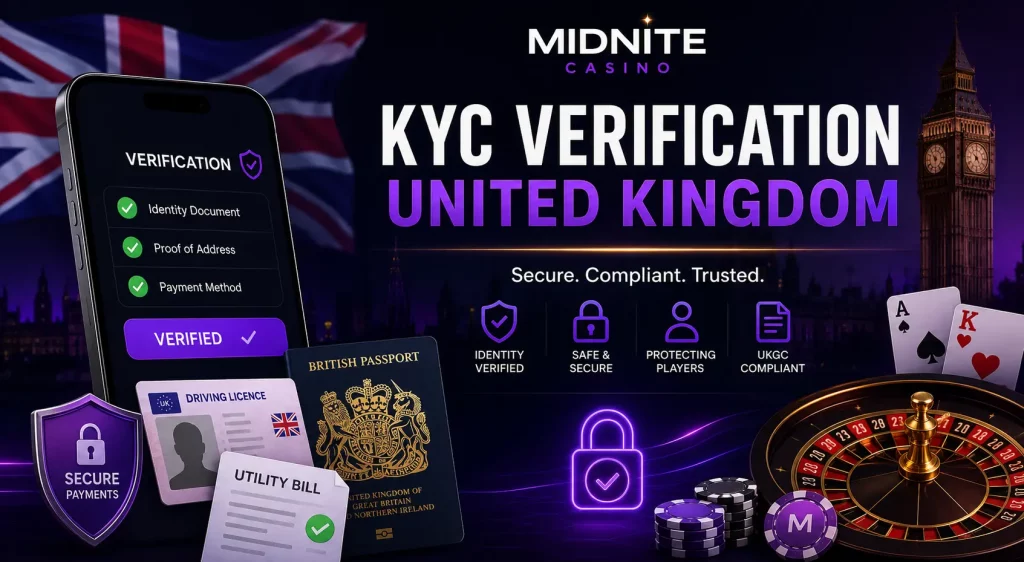
Commonly accepted documents include:
- Passport
- Driving licence
- National identity card
- Utility bill
- Bank statement
- Proof of payment ownership
Verification speed depends on the accuracy of submitted information and the quality of uploaded files. Most modern casinos attempt to streamline the process through automation, AI-based document recognition, and secure encrypted systems.
One major misconception is that KYC only protects the casino operator. In reality, verification systems protect players as well. Fraudulent account activity, unauthorised transactions, bonus abuse, and underage gambling are significantly reduced through mandatory identity checks.
The UK market also places heavy emphasis on responsible gambling monitoring. Verification systems help operators identify suspicious behaviour patterns and prevent harmful gambling practices before they escalate.
Many modern platforms integrate KYC into the overall onboarding experience. Players may encounter verification requests during:
- Initial registration
- Deposit attempts
- Withdrawal requests
- Large transaction reviews
- Security alerts
- Account recovery processes
For UK players, verification is now considered a standard part of the digital gambling ecosystem, much like banking authentication or financial security checks.
The growth of mobile gambling and App-based casino platforms has also influenced KYC development. Operators now optimise document uploads for smartphones, enabling users to complete verification using built-in cameras and automated scanning tools.
Estimated KYC Processing Times in UK Online Casinos
| Verification Category | Automated Review | Manual Review | Risk Level | Approval Speed |
|---|---|---|---|---|
| Basic Identity Check | 1–10 Minutes | Up to 12 Hours | Low | Very Fast |
| Address Verification | 10–30 Minutes | 24 Hours | Medium | Fast |
| Payment Method Review | 15–60 Minutes | 48 Hours | Medium | Moderate |
| Enhanced Due Diligence | Rarely Automated | 2–5 Days | High | Slow |
Because the UK gambling market is highly competitive, casinos aim to balance security with convenience. Faster verification workflows improve user satisfaction while maintaining compliance obligations.
KYC Verification Stages in UK Online Casinos
| Verification Stage | Purpose | Common Documents | Typical Completion Time |
|---|---|---|---|
| Identity Check | Confirm player identity | Passport / Driving Licence | 5 minutes – 24 hours |
| Address Verification | Confirm UK residency | Utility Bill / Bank Statement | 1 – 48 hours |
| Payment Verification | Prevent fraud | Card photo / eWallet proof | Several hours |
| Enhanced Due Diligence | Large transactions review | Source of funds documents | 1 – 5 days |
KYC has evolved far beyond simple document collection. Modern systems now incorporate behavioural analysis, risk scoring, and automated fraud detection technologies. UK operators continuously update these systems to comply with regulatory changes and cybersecurity threats.
The relationship between verification and responsible gambling has also become stronger over time. Casinos increasingly monitor transaction patterns, gameplay intensity, and financial consistency as part of broader player safety initiatives.
For players, the best approach is proactive compliance. Submitting accurate details during registration significantly reduces delays later. Many account restrictions arise simply because information entered during sign up does not perfectly match official documents.
Another important factor is document quality. Blurry images, cropped edges, hidden details, or expired identification frequently cause rejection. Most casinos provide guidelines explaining acceptable file formats and image standards.
As the industry becomes more digital, verification technology continues to improve. Biometric scanning, facial recognition, and instant database cross-checking are gradually reducing manual review times.
UK players today expect fast access to entertainment, secure transactions, and efficient customer service. KYC systems attempt to deliver all three simultaneously while maintaining regulatory integrity.
Although some users focus primarily on Games and promotional offers, identity verification remains one of the most important foundations of secure online gambling in the United Kingdom.
Why UK Casinos Require KYC Verification
The requirement for KYC verification in United Kingdom online casinos is rooted in several overlapping legal, financial, and security obligations. UK operators cannot legally provide gambling services without implementing customer verification systems that meet strict compliance standards.
At the centre of these requirements stands the UK Gambling Commission, which regulates licensed operators throughout Great Britain. The UKGC enforces rules intended to prevent criminal activity, protect vulnerable users, and maintain transparency within the gambling sector.
Online casinos handle large volumes of digital transactions every day. Without verification systems, gambling platforms could easily become targets for:
- Money laundering
- Identity theft
- Fraudulent transactions
- Underage gambling
- Bonus exploitation
- Payment abuse
- Multi-account manipulation
KYC procedures create accountability by linking gambling activity to verified individuals.
One of the primary legal drivers behind verification is anti-money laundering legislation. Criminal organisations sometimes attempt to move illegal funds through gambling systems to disguise transaction origins. Verification helps operators detect suspicious financial behaviour and report irregular activity to authorities when necessary.
The UK regulatory environment has intensified significantly over the past decade. Operators now face much higher compliance expectations than earlier generations of online casinos. Failure to perform proper customer verification can result in:
- Multi-million-pound fines
- License suspension
- Regulatory investigations
- Operational restrictions
- Public enforcement actions
As a result, casinos invest heavily in security infrastructure and automated compliance systems.
KYC also supports age verification. Gambling under the legal age is strictly prohibited in the United Kingdom. Operators must confirm that users are adults before allowing unrestricted gameplay or withdrawals.
The verification process typically begins with automated checks against external databases. If the system cannot confirm identity instantly, the player is asked to submit documentation manually.
Casinos also use verification to secure financial transactions. Payment fraud remains a major issue across the digital entertainment sector. By verifying ownership of cards and payment methods, casinos reduce chargebacks and unauthorised deposit activity.
Core Compliance Objectives Behind UK Casino KYC Systems
| Compliance Area | Primary Goal | Player Benefit | Operator Benefit |
|---|---|---|---|
| Anti-Money Laundering | Prevent illegal financial activity | Safer transactions | Regulatory protection |
| Identity Verification | Confirm player legitimacy | Better account security | Fraud reduction |
| Age Verification | Block underage gambling | Protected gaming ecosystem | Legal compliance |
| Responsible Gambling | Monitor harmful behaviour | Improved player protection | Safer platform reputation |
Main Reasons for KYC Verification in UK Casinos
Responsible gambling measures now form a major component of modern KYC frameworks. Casinos monitor behavioural indicators that may suggest financial distress or problematic gambling activity.
Enhanced verification may be requested if unusual account behaviour appears, including:
- Rapid deposit increases
- Large unexplained transactions
- Multiple payment methods
- Frequent withdrawal reversals
- Geographic inconsistencies
- Suspicious betting patterns
In these situations, operators may request source-of-funds documentation or additional identity confirmation.
The digital transformation of gambling has accelerated the need for advanced verification systems. Mobile-first gambling environments allow users to register and deposit within minutes, which increases the importance of automated security controls.
Modern UK casino verification systems often rely on AI-powered document analysis. These systems evaluate:
- Document authenticity
- Image quality
- Data consistency
- Expiration dates
- Security features
- Facial comparison checks
Automation dramatically reduces review times compared to older manual processes.
For legitimate players, KYC can actually improve account security and transaction stability. Verified accounts often receive smoother withdrawals, stronger fraud protection, and reduced risk of unauthorised access.
Verification also helps protect promotional ecosystems. Abuse of Login Bonus campaigns through duplicate accounts has historically caused significant financial losses for operators. Identity verification reduces such exploitation.
Casinos continuously attempt to optimise the balance between compliance and user convenience. Faster onboarding processes improve customer retention while maintaining legal integrity.
The increasing popularity of Pokies-style slot entertainment among UK audiences has further expanded the scale of digital gambling ecosystems. As transaction volumes grow, verification systems become even more essential.
Many players only fully appreciate the value of KYC when problems arise elsewhere in the digital economy. Identity theft, hacked accounts, and financial fraud are widespread online risks. Verified gambling systems create additional barriers against such threats.
The role of customer support teams is also critical during verification. Many operators now provide live chat assistance, guided upload systems, and automated status tracking to reduce player frustration.
In regulated UK markets, verification should not be viewed as a sign of distrust. Instead, it functions as a foundational layer of digital security that benefits both operators and customers.
Documents Required for KYC Verification
The success of any KYC verification process largely depends on the accuracy and quality of the documents submitted by the player. UK online casinos follow strict compliance standards when reviewing identification materials, meaning even small inconsistencies can delay approval.
Most operators divide required documentation into three primary categories:
- Proof of identity
- Proof of address
- Proof of payment ownership
Each category serves a specific compliance purpose.
Proof of identity confirms that the individual using the casino account is a real person legally eligible to gamble in the United Kingdom. Operators must ensure that accounts are not being created using stolen or fabricated identities.
Accepted identification documents usually include:
- Passport
- Driving licence
- National identity card
These documents must generally be valid, unexpired, and clearly readable. Casinos often reject images with glare, cropped edges, poor lighting, or hidden details.
Proof of address is used to verify residency information. The address entered during registration must match the submitted document.
Commonly accepted proof-of-address documents include:
- Utility bills
- Bank statements
- Council tax letters
- Government correspondence
Most casinos require these documents to be issued within the last three months.
Payment verification ensures that deposited funds belong to the verified account holder. This prevents fraudulent card usage and unauthorised financial activity.
Accepted payment verification methods may include:
- Partial bank card photos
- Skrill screenshots
- PayPal ownership proof
- Bank account confirmations
The increasing use of digital banking has encouraged casinos to support electronic statements and secure upload systems.
One of the most common reasons for delayed verification is inconsistency between account information and uploaded documentation. Even minor differences in spelling, abbreviations, or formatting can trigger manual review procedures.
Players should carefully ensure that:
- Names match exactly
- Addresses are identical
- Dates of birth are correct
- Uploaded files are uncropped
- Documents remain unexpired
Another frequent issue involves image quality. Verification systems rely heavily on automated scanning technology. Poor image clarity may prevent systems from extracting document data correctly.
Recommended practices for uploads include:
- Using bright lighting
- Avoiding reflections
- Capturing all document corners
- Uploading high-resolution images
- Avoiding filters or edits
Many modern casinos support real-time smartphone uploads directly through secure encrypted portals. This has simplified the process considerably compared to older desktop-only verification systems.
Enhanced Due Diligence (EDD) represents a more advanced level of KYC. These reviews usually occur when:
- Transaction values increase significantly
- Financial activity appears unusual
- Regulatory thresholds are triggered
- Risk analysis scores rise
EDD procedures may request documentation related to income sources or financial affordability.
UK gambling regulation increasingly focuses on affordability and financial sustainability. Operators are expected to identify signs that gambling activity exceeds reasonable financial capacity.
This regulatory shift has influenced how casinos assess verification data. The process is no longer limited solely to identity confirmation — it now forms part of broader consumer protection systems.
Casinos also prioritise cybersecurity during document handling. Verification uploads are typically protected through:
- SSL encryption
- Secure storage systems
- Restricted internal access
- Data protection compliance
Because casinos store sensitive information, UK operators must comply with GDPR and other privacy regulations governing personal data management.
Players are advised to use only official casino upload portals rather than sending sensitive documents through unsecured communication channels.
Many operators now provide dedicated verification dashboards where users can:
- Track document status
- Receive upload notifications
- Review pending requests
- Monitor approval progress
This transparency improves the overall user experience and reduces confusion during processing.
The expansion of digital finance and remote identity systems will likely continue shaping future KYC development. Biometric identification, live facial verification, and automated government database integrations are expected to become increasingly common.
How to Complete KYC Verification Smoothly and Avoid Delays
For most UK casino players, the KYC process becomes significantly easier when approached correctly from the beginning. Verification delays are often caused not by casino systems themselves, but by incomplete information, poor document quality, or inconsistent account details.
The first step toward a smooth verification experience starts during account registration. Players should always provide accurate legal information exactly as it appears on official documents.
Important registration details include:
- Full legal name
- Correct residential address
- Accurate date of birth
- Valid contact details
Small mistakes made during registration can later create major verification complications.
Many casinos automatically cross-reference registration data with external databases. If inconsistencies appear, additional manual verification may become necessary.
Players should also prepare their documentation early rather than waiting until withdrawal requests are submitted. Some users experience frustration because they attempt verification only after winning funds.
Proactive verification provides several advantages:
- Faster withdrawals
- Reduced account restrictions
- Improved security
- Smoother financial transactions
- Fewer customer support interactions
Modern casinos increasingly encourage early verification through automated onboarding systems.
Most Common Causes of KYC Verification Delays
One of the simplest ways to speed up approval is ensuring that uploaded documents remain fully visible. Cropped images are among the most frequent rejection reasons.
When photographing documents:
- Use natural lighting
- Avoid shadows
- Keep images sharp
- Show all four corners
- Use high-resolution settings
Casinos often reject screenshots when original photos are required.
Players should also ensure that payment methods used for deposits belong directly to the verified account holder. Third-party payments commonly trigger security investigations.
Best Practices for Smooth KYC Verification
| Recommended Action | Why It Matters | Impact on Approval Speed | Difficulty Level |
|---|---|---|---|
| Use High-Quality Photos | Improves automated scanning | High | Easy |
| Match Registration Details Exactly | Avoids manual review | Very High | Easy |
| Verify Early | Prevents withdrawal delays | High | Easy |
| Respond Quickly to Support Requests | Keeps review active | Moderate | Easy |
| Use Personal Payment Methods Only | Reduces fraud flags | High | Moderate |
During the verification process, customer support teams may request additional clarification. Responding quickly to these requests helps minimise processing delays.
Many UK operators now provide AI-assisted verification systems capable of approving documents within minutes. However, manual reviews remain necessary in higher-risk cases or when automated systems detect inconsistencies.
Another factor influencing verification speed is account behaviour. Sudden large deposits, unusual betting patterns, or rapid withdrawal requests can trigger enhanced security reviews.
Verification procedures are also heavily connected to responsible gambling regulations. UK casinos are increasingly expected to assess affordability and financial risk indicators.
This means that verification today involves more than identity checks alone. Operators may evaluate broader account activity to ensure compliance with regulatory obligations.
The growth of mobile gambling has accelerated demand for faster digital verification tools. Most modern UK casinos now optimise uploads for smartphones and tablets, enabling users to complete the entire process remotely.
Casino interfaces increasingly integrate dedicated help sections, instructional guides, and support Links designed to simplify KYC procedures for users unfamiliar with document verification systems.
Security remains the central priority behind every stage of the process. While some players view KYC as inconvenient, the system protects both operators and customers from fraud, financial abuse, and cybercrime.
As technology evolves, KYC verification is likely to become even more automated. Future systems may rely heavily on:
- Facial recognition
- Biometric verification
- AI-powered fraud detection
- Instant database authentication
- Real-time risk scoring
These technologies aim to reduce manual review times while strengthening security standards.
The UK gambling market continues to set some of the highest compliance standards globally. Verification systems will remain a core requirement for any licensed casino operator serving British players.
Ultimately, successful KYC verification depends on preparation, accuracy, and transparency. Players who provide clear documentation and consistent information typically complete the process quickly and without complications.
For modern UK online casinos, KYC is no longer just a regulatory checkbox. It has become an essential component of digital trust, secure payments, responsible gambling, and long-term platform integrity.






Comments